What Should Be in a Dog Walking Service Agreement With New Clients?
A clear agreement protects you and sets expectations. Here are the essentials to cover before you take a new client's key.
Cover the scope, length, and schedule of walks, your rates, payment timing, and cancellation terms. Document how you access the home, where supplies are, and emergency contacts including the dog's vet. Agree in advance on authorization to seek veterinary care and who pays, before you ever need it.
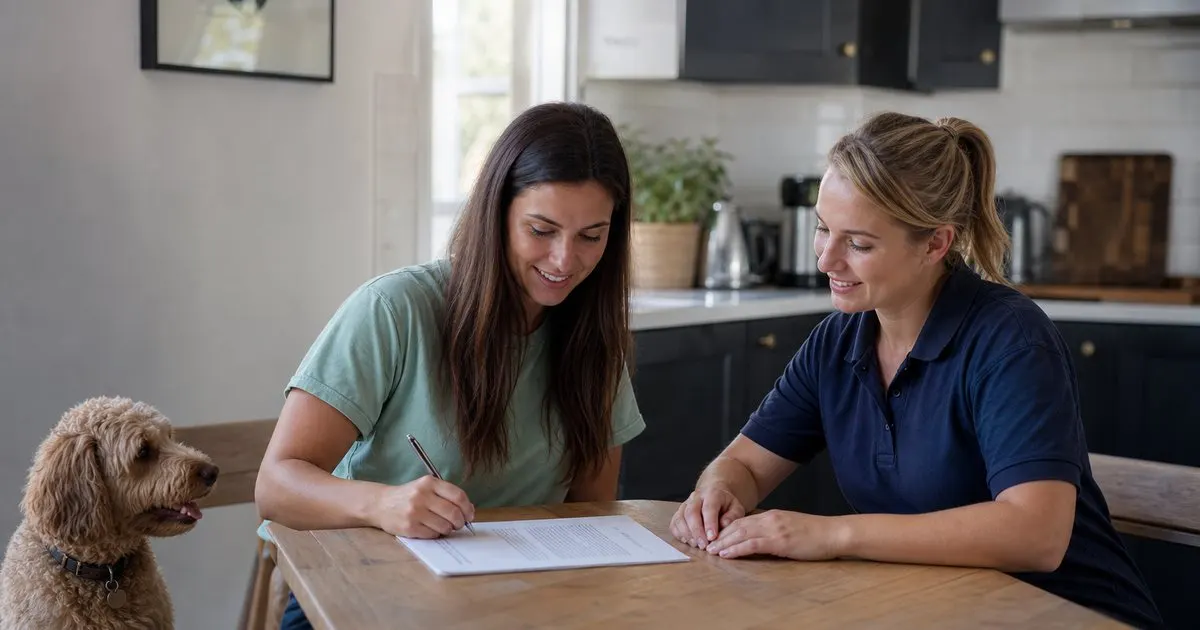
Scope and schedule
Spell out what a walk includes, how long it lasts, and the days and times you will come. Clear scope prevents the slow creep of extra tasks that were never priced. Related: Why Does a Dog Refuse to Leave the House for a Walker, and What Should You Do?
Both sides should know exactly what is being paid for.
Keep reading: How Should a Dog Walker Plan Efficient Routes for Back to Back Visits?, What Information Do Dog Owners Actually Want in a Post Walk Update?, Why Do GPS Check Ins Matter So Much for Professional Dog Walkers?. See how PupRoutr helps you dog walking route planning and visit check-ins.
Payment and cancellation terms
State your rates, when payment is due, and your policy for late cancellations and no-access visits. These are the terms that cause friction later if left vague. Related: How Do You Price Recurring Dog Walking Visits Without Undercharging Yourself?
A written cancellation window saves you from awkward case-by-case debates.
Keys, access, and home details
Document how you access the home, where supplies are, and any quirks like a tricky lock or an alarm. Note emergency contacts and the dog's vet. Related: What Is the Best Way to Manage Client Keys and Lockbox Codes Across Many Homes?
Getting this in writing at the start avoids a locked-out visit that helps no one.
Emergencies and authorization
Agree in advance on what you do if the dog is injured or ill, including authorization to seek veterinary care and who pays. This is not a conversation to have during a crisis. Related: What Should a Dog Walker Do When a Dog Gets Hurt or Sick Mid Visit?
Clear emergency terms protect the dog, the owner, and you.
- Define the scope, length, and schedule of walks
- State rates, payment timing, and cancellation terms
- Document home access, supplies, and emergency contacts
- Agree on emergency vet authorization before you need it

Julien Jimenez
Julien Jimenez is an independent software builder based in Paris. He designs, ships, and operates focused SaaS products for small businesses and independent professionals. Read the full author page.
Frequently asked questions
Why settle emergency vet authorization before taking a client?
A crisis is not the moment to work out who can approve care and who pays. Agreeing in advance protects the dog, the owner, and you when speed matters most.
What does a written cancellation window prevent?
It saves you from awkward case-by-case debates. Stating your policy for late cancellations and no-access visits up front removes the vagueness that causes friction later.
Prove every walk happened, effortlessly
Dog walking route planning and visit check-ins. PupRoutr is built to help you put this into practice.
Plan my walksMore from the PupRoutr blog
How Should a Dog Walker Plan Efficient Routes for Back to Back Visits?
What Information Do Dog Owners Actually Want in a Post Walk Update?
Why Do GPS Check Ins Matter So Much for Professional Dog Walkers?
Get the PupRoutr playbook
Practical guides on dog walking visits, straight to your inbox as we publish them. No spam, unsubscribe any time.