Why Does a Dog Refuse to Leave the House for a Walker, and What Should You Do?
Some dogs plant their feet at the front door the moment a new walker shows up. Here is what usually causes it, how to read the signals, and how to run the visit without forcing anything.
The usual reasons a dog balks at the door
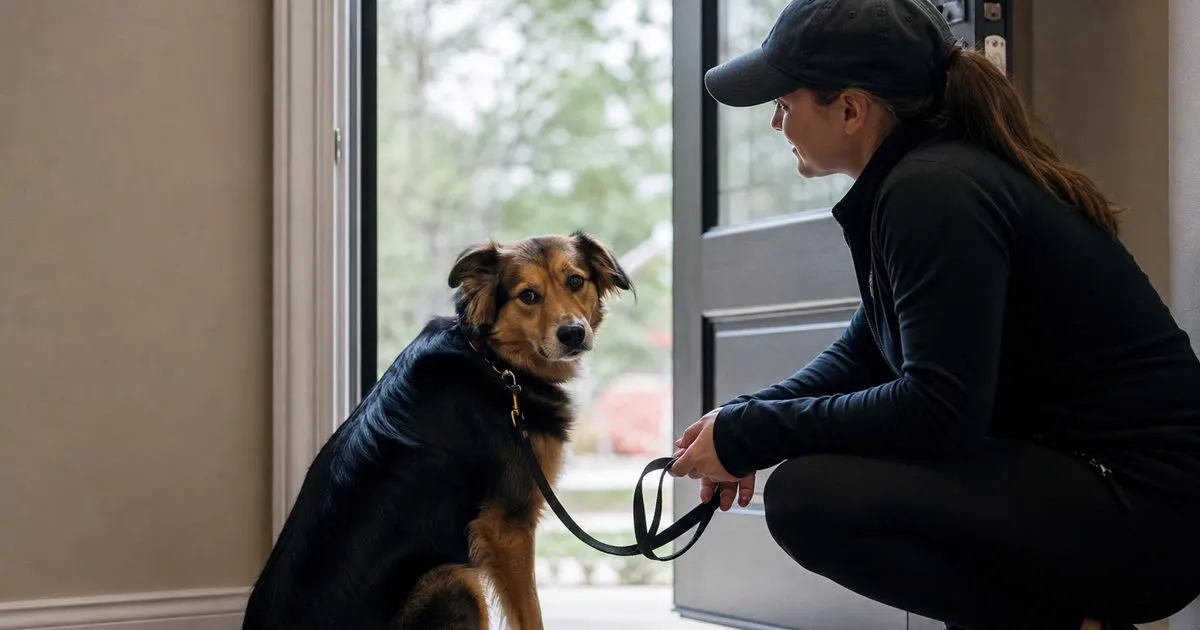
Most refusals are about unfamiliarity, not stubbornness. A stranger walks in while the owner is gone, picks up the leash, and expects the dog to follow them out into the world. That is a lot to process, especially when the owner skipped a proper meet and greet. Recently adopted dogs, dogs with a history of being rehomed, and dogs who have only ever walked with one person are the most likely to freeze. Physical causes are the second bucket: a sore hip, a cracked paw pad, a new harness that pinches under the arm, or a memory of hot pavement from last week. Environmental triggers round it out, such as distant thunder, construction noise, or a garbage truck idling outside.
Reading the body language tells you which bucket you are in. A dog that stands with its weight shifted back, tail low, ears pinned, avoiding eye contact, licking its lips or yawning is anxious, not defiant. A dog that is bouncing, mouthing the leash, and spinning but will not cross the threshold may be overstimulated, or may have learned that the door opening means the owner leaves. Those two dogs need different responses, so note what you see in the visit log. Patterns across visits, like a dog that only refuses on windy days or only with one walker, are far easier to solve than a single confusing afternoon. Related: How Should a Dog Walker Plan Efficient Routes for Back to Back Visits?
Keep reading: How Should a Dog Walker Plan Efficient Routes for Back to Back Visits?, What Information Do Dog Owners Actually Want in a Post Walk Update?, Why Do GPS Check Ins Matter So Much for Professional Dog Walkers?. See how PupRoutr helps you dog walking route planning and visit check-ins.
What to do in the first ten minutes
Do not loom over the dog or reach for the collar. Set the leash down, sit sideways on the floor a few feet away, and let the dog decide to approach. If the owner has approved treats, toss a couple behind you rather than luring the dog toward your hand, so the dog moves on its own terms. Keep your voice low and your movements slow. Give it several minutes. Many dogs reset once they conclude the visitor is boring rather than threatening. If the home has a fenced yard, open the back door and let the dog relieve itself off leash first, which often takes the pressure off the whole visit.
When the dog will follow you around the house but stalls at the threshold, step outside first and wait on the porch with the door open and the leash in a loose loop. Walk a few steps down the path, then come back, then repeat. Never pull. A dog that gets dragged through a doorway remembers it, and the next visit starts from a worse place. If there is no progress after ten to fifteen minutes, convert the visit into an indoor potty break and play session, refresh the water, and write down exactly what you tried and how the dog responded. That record is worth more to the owner than a forced walk around the block.
Communicating with the owner without alarming them
Owners read the words would not walk and immediately assume something is wrong with their dog or with you. Head that off with a factual message: what the dog did, what you tried, whether the dog ate, drank, or relieved itself, and how long you stayed. Attach a photo of the dog looking relaxed if you managed to get one. Then ask a few targeted questions. Does the dog normally hesitate with new people? Is there a cue word the owner uses before walks? Is there a particular harness, door, or route the dog is used to? Owners often know the answer and simply forgot to mention it during onboarding. Related: What Information Do Dog Owners Actually Want in a Post Walk Update?
Close with a plan rather than an apology. Propose a short second visit while the owner is home, or two or three visits where the stated goal is building trust indoors before attempting a full walk. Charging for those visits is fair because you are spending the time and showing up, but say so plainly and let the owner decide. Time-stamped check-ins and check-outs help here, since the owner can see you stayed the full booked window even though the walk itself was short. Honest reporting on a bad day builds more trust than a cheerful update that hides the problem. Related: Why Do GPS Check Ins Matter So Much for Professional Dog Walkers?
Building a routine that prevents the standoff
Prevention starts at onboarding. Insist on a meet and greet where the owner walks the first block with you, so the dog sees the two of you together. Ask the owner to leave the gear in the same spot every day, use the same door, and, for very bonded dogs, record a short voice note saying their usual walk cue. Note the dog's preferred route in the client profile so you are not taking a nervous dog somewhere unfamiliar on visit one. Small details like which side of the sidewalk the dog prefers or whether it needs to sniff the porch first are worth writing down. Related: How Many Dogs Can One Walker Safely Handle on a Single Group Walk?
Consistency does the rest. Assign the same walker where you can, keep the arrival window steady, and repeat the same greeting ritual each time. Record what worked in the visit notes, for example came out after treats were tossed on the porch, walked normally after the first block, so a substitute walker inherits the playbook instead of starting from zero. Most dogs go from door-balking to waiting at the window within a few weeks. When a dog never improves, or the fear escalates into growling or snapping, refer the owner to a qualified trainer rather than pushing through. Saying this is beyond what a walk can fix is the honest call, and owners respect it.
- A dog refusing to leave is almost always anxious, uncomfortable, or overstimulated, and each of those calls for a different response.
- Give the dog space and time, never pull it through the door, and switch to an indoor potty and play visit if nothing changes after ten to fifteen minutes.
- Send the owner a factual update with what you tried and what the dog did, then propose a trust-building plan instead of an apology.
- A proper meet and greet, a consistent walker, and detailed visit notes prevent most door standoffs before they start.

Julien Jimenez
Julien Jimenez is an independent software builder based in Paris. He designs, ships, and operates focused SaaS products for small businesses and independent professionals. Read the full author page.
Prove every walk happened, effortlessly
Dog walking route planning and visit check-ins. PupRoutr is built to help you put this into practice.
Plan my walksMore from the PupRoutr blog
How Should a Dog Walker Plan Efficient Routes for Back to Back Visits?
What Information Do Dog Owners Actually Want in a Post Walk Update?
Why Do GPS Check Ins Matter So Much for Professional Dog Walkers?
Get the PupRoutr playbook
Practical guides on dog walking visits, straight to your inbox as we publish them. No spam, unsubscribe any time.