What Should a Dog Walker Do When a Dog Gets Hurt or Sick Mid Visit?
A cut paw, a bee sting, vomiting on the sidewalk, or a sudden limp: the order of operations for the first minutes, who to call and when, and how to document it so the owner and your insurer have the full picture.
Prepare before it happens
The decisions you make in an emergency are mostly made in advance. Every client profile should hold the primary vet's name and number, the nearest emergency clinic, known conditions, medications, allergies, and a note on whether the dog tolerates handling when in pain. Your service agreement needs a veterinary authorization clause: permission to seek treatment if the owner cannot be reached, a spending cap the owner has agreed to, and who pays. Without that clause you are standing in a clinic lobby guessing what the owner would want. Related: What Information Do Dog Owners Actually Want in a Post Walk Update?
Carry a compact kit on every route, not in the car: gauze, self adhering wrap, saline, blunt tipped tweezers, a soft muzzle, a small towel, a spare slip leash, and the emergency clinic address written down in case your phone dies. Take a pet first aid course once; the hands-on practice with bandaging and recognizing shock is worth more than any checklist. Finally, know where the closest emergency vet is for each part of your route, and how long it takes to get there at midday. Looking that up while a dog is bleeding is not the moment. Related: How Much Does Walk Length Really Matter for Dogs on a Daily Midday Visit?
Keep reading: How Should a Dog Walker Plan Efficient Routes for Back to Back Visits?, What Information Do Dog Owners Actually Want in a Post Walk Update?, Why Do GPS Check Ins Matter So Much for Professional Dog Walkers?. See how PupRoutr helps you dog walking route planning and visit check-ins.
The first five minutes
Stop and secure the dog first. Shorten the leash, move off the road or path, and if you are on a group walk, secure the other dogs to a post or fence before you do anything else. Then assess in a fixed order: is the dog breathing normally, is there bleeding and how much, can it bear weight on all four legs, what color are the gums, and is it responsive to its name. Stay calm and speak softly, because a dog in pain may bite even a handler it loves. Use the soft muzzle only if the dog is trained to accept one, you need to inspect a painful area, and the dog is breathing normally. Never muzzle a dog that is vomiting, panting hard, overheated, or struggling to breathe, because a muzzle blocks the panting and vomiting the dog needs; keep your hands clear of the mouth and get to the vet instead. Related: How Many Dogs Can One Walker Safely Handle on a Single Group Walk?
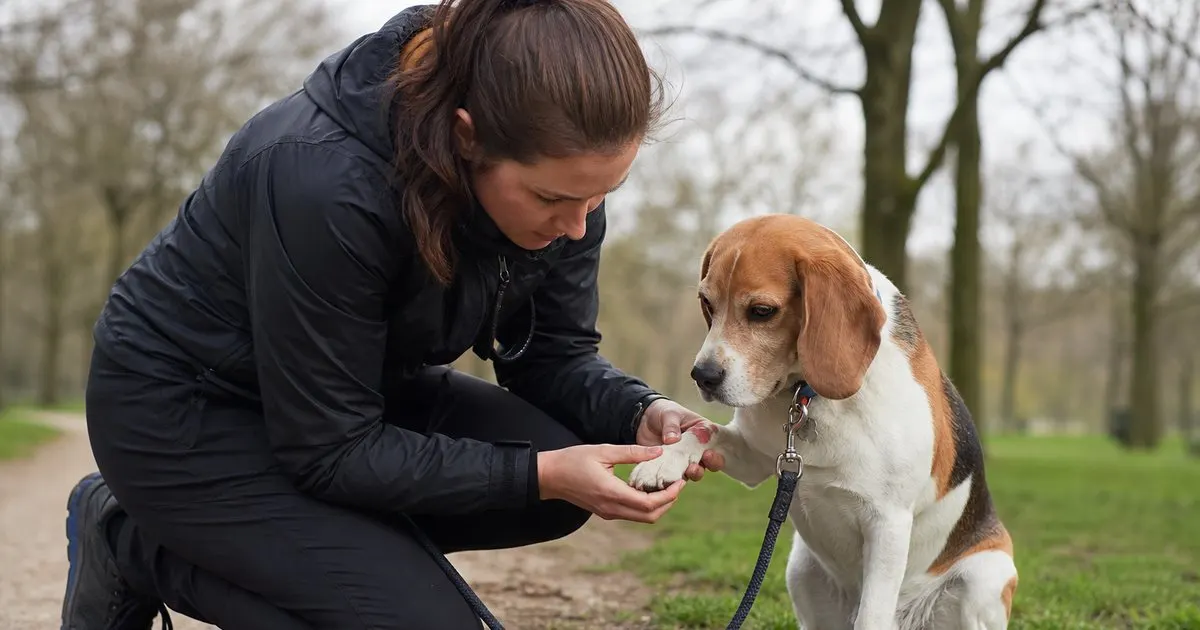
Minor issues can be handled on the spot. For a small cut, a torn nail, or a thorn, rinse with saline, wrap lightly, and walk slowly back or carry a small dog. A single bout of vomiting with the dog otherwise bright usually means cutting the walk short, heading back at an easy pace, and telling the owner so they can watch for a repeat. Serious signs mean you go straight to the emergency vet and call the owner from the road: collapse, heavy or spurting bleeding, labored breathing, a swollen or hard belly with retching, seizure, a suspected toxin such as a grabbed mushroom or spilled antifreeze, heatstroke signs, or any impact with a vehicle or bike. Never give human medication, and do not wait to see if it gets better when the sign is on that list.
Contacting the owner and the vet
For anything beyond a scrape, call the owner rather than text. Say what happened, what you are seeing, and what you are doing right now, in that order, and keep it short. If the owner does not answer, leave a voicemail, send a text with the same three points, then follow the authorization clause in your agreement without waiting. Call the clinic while you are on the way so they can prepare, and tell them anything the dog might have eaten or been exposed to, plus any medications from the profile.
Stay with the dog at the clinic until the owner arrives or the vet tells you the dog is stable and admitted. Note the times: when the incident happened, when you called the owner, when you left for the clinic, when you arrived. If other clients are waiting on your route, message them honestly that you have an emergency and give a revised arrival time or arrange cover. Most owners are understanding when the reason is a dog's welfare, and a vague delay message does more damage than the truth.
Documenting and following up
Write the incident report the same day while details are fresh. Include the time, the location, what happened as best you can tell, what you observed, what you did, who you contacted and when, and photos of the injury and the scene if you took them. The GPS stamped check-in and check-out points help pin the location and the time frame, and apps like PupRoutr keep those location stamps and timestamps attached to the visit, but a plain document with the same facts is fine. If the incident involved a vet bill, notify your insurance carrier promptly even if you expect to settle it directly, because late notice can void coverage.
Follow up with the owner the next day and again a few days later. Ask how the dog is doing and whether the vet changed anything about exercise or medication. Review your own handling honestly: did the route pass a construction site you should avoid, was the leash too long, did you miss an early limp? If you made a mistake, say so plainly. Owners forgive an honest error far more readily than a polished story that falls apart later, and a walker who reports the hard things is the one they keep. Related: How Should a Dog Walker Plan Efficient Routes for Back to Back Visits?
- Emergency decisions are made in advance: vet details, a signed authorization with a spending cap, and a first aid kit you actually carry.
- Secure the dog first, then assess breathing, bleeding, weight bearing, gum color, and responsiveness in a fixed order.
- Collapse, heavy bleeding, breathing trouble, a swollen belly, seizure, suspected toxin, or a vehicle strike mean the vet first and the owner from the road.
- Write the incident report the same day with times and photos, tell the insurer promptly, and follow up with the owner honestly.

Julien Jimenez
Julien Jimenez is an independent software builder based in Paris. He designs, ships, and operates focused SaaS products for small businesses and independent professionals. Read the full author page.
Prove every walk happened, effortlessly
Dog walking route planning and visit check-ins. PupRoutr is built to help you put this into practice.
Plan my walksMore from the PupRoutr blog
How Should a Dog Walker Plan Efficient Routes for Back to Back Visits?
What Information Do Dog Owners Actually Want in a Post Walk Update?
Why Do GPS Check Ins Matter So Much for Professional Dog Walkers?
Get the PupRoutr playbook
Practical guides on dog walking visits, straight to your inbox as we publish them. No spam, unsubscribe any time.