When Should a Solo Dog Walker Hire a Second Walker to Cover Visits?
The signals that you have outgrown one pair of hands, the honest difference between an employee and a contractor, and how to bring on a second walker without losing the clients who signed up for you.
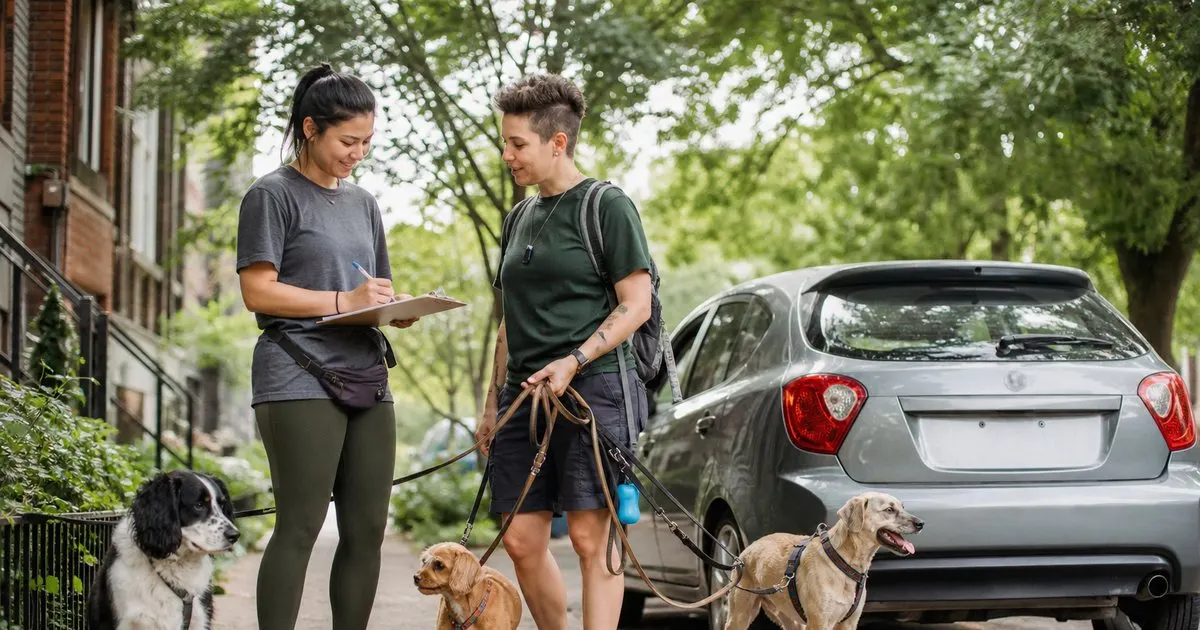
The capacity signals that matter
The midday window is the constraint that defines a walking business. Most clients want a visit somewhere between late morning and mid afternoon, and no amount of hustle stretches those hours. When you are regularly turning away requests inside your core service area, when you have no cover at all for a sick day or a family emergency, and when a week off means either refunding clients or begging a friend, you have hit the ceiling. The other tell is quality drift: arriving late, trimming walks to stay on schedule, or skipping the photo because you are already in the car. Clients notice that before you do.
Put numbers on it before deciding. Count visits per day for a typical week, total minutes spent driving versus minutes spent with dogs, and how many inquiries you declined in the last month. If drive time is approaching walk time, the route is stretched too thin for one person and a second walker in a separate zone will fix more than any route optimization can. If declined inquiries would fill another full midday, the demand is real and not a lucky month. Revenue matters too, but capacity and burnout usually force the decision first. Related: How Should a Dog Walker Plan Efficient Routes for Back to Back Visits?
Keep reading: How Should a Dog Walker Plan Efficient Routes for Back to Back Visits?, What Information Do Dog Owners Actually Want in a Post Walk Update?, Why Do GPS Check Ins Matter So Much for Professional Dog Walkers?. See how PupRoutr helps you dog walking route planning and visit check-ins.
Employee, contractor, or overflow partner
This is where honest advice matters more than optimism. Worker classification rules vary by state and are enforced, and the way most walking businesses operate, with the owner setting the schedule, the routes, the methods, and the client relationship, usually points toward employee status rather than independent contractor. An employee brings payroll taxes, workers compensation, and a likely update to your liability insurance, so talk to an accountant and check your state's labor rules before writing a job post. A true contractor sets their own schedule, carries their own insurance, and can work for others, which is a poor fit for someone you need at a specific door at 12:15. Related: What Information Do Dog Owners Actually Want in a Post Walk Update?
A middle path for the first few months is an overflow arrangement with another established local walker who has their own business and insurance. You refer each other's excess, cover each other's vacations, and keep the paperwork simple. It is not a growth plan, but it buys time to learn whether your demand is steady enough to support a real hire. Whatever route you choose, write it down: pay structure, mileage, who supplies gear, what happens with a no-show, and how client information is handled and returned.
Finding and vetting someone clients will trust
Good candidates tend to come from adjacent worlds: veterinary assistants looking for daytime hours, shelter volunteers, dog daycare staff, retirees who already walk every morning, and students with midday gaps. Ask for references, run a background check, and check the driving record if the role involves transporting dogs. Then test in the field. A paid shadow day on your easiest route shows you how they handle keys, a nervous dog, a locked gate, and a client who wants to chat. A second day where they lead a small group walk while you observe tells you far more than an interview ever will. Related: How Many Dogs Can One Walker Safely Handle on a Single Group Walk?
Write your standards before the first shadow day so you are training to a document rather than to your memory. Cover check-in and check-out timing, what a photo should show, what goes into a visit note, how to handle a dog that will not come out, and what to do if something goes wrong. Pay fairly for the area, because a walker who is quietly resenting the wage is the one who skips the last five minutes. Start them on the simplest, most forgiving clients and keep the reactive dogs, the anxious owners, and the tricky access situations on your own route until trust is earned.
Introducing the new walker to clients
Clients hired you, and some will feel a small loss when someone else shows up. Get ahead of that with a message a week or two before the change: who the new walker is, why you trust them, and an offer of a short meet and greet at the client's home. Keep the update format identical, same check-in and check-out timestamps, same photo style, same note structure, so the experience feels continuous. GPS tracked check-ins help here because the client sees the same proof of visit regardless of who is holding the leash, and PupRoutr or any comparable app makes that consistent across walkers without extra effort. Related: Why Do GPS Check Ins Matter So Much for Professional Dog Walkers?
Ask each client for feedback after the second week, and actually change something if they raise a concern. Keep the profiles current so the new walker never has to guess about a gate code or a dog's quirk. Expect one or two clients to ask for you specifically; accommodate them where you can and be honest where you cannot. A second walker done well turns a business that stops when you are sick into one that keeps its promises, which is the reason clients stay.
- Declined midday requests in your core area, zero sick day cover, and drive time creeping toward walk time are the signals to hire.
- Most walking businesses control schedule and method, which usually points to employee status, so consult an accountant and your state's rules first.
- Vet candidates with a background check, a paid shadow day, and a written standards document rather than an interview alone.
- Introduce the new walker ahead of time, keep the update format identical, and start them on your easiest clients.

Julien Jimenez
Julien Jimenez is an independent software builder based in Paris. He designs, ships, and operates focused SaaS products for small businesses and independent professionals. Read the full author page.
Prove every walk happened, effortlessly
Dog walking route planning and visit check-ins. PupRoutr is built to help you put this into practice.
Plan my walksMore from the PupRoutr blog
How Should a Dog Walker Plan Efficient Routes for Back to Back Visits?
What Information Do Dog Owners Actually Want in a Post Walk Update?
Why Do GPS Check Ins Matter So Much for Professional Dog Walkers?
Get the PupRoutr playbook
Practical guides on dog walking visits, straight to your inbox as we publish them. No spam, unsubscribe any time.