How Much Does Walk Length Really Matter for Dogs on a Daily Midday Visit?
Twenty, thirty, or sixty minutes: how to match the visit length to the dog rather than the price sheet, and why a focused shorter visit often beats a longer one that is mostly transit.
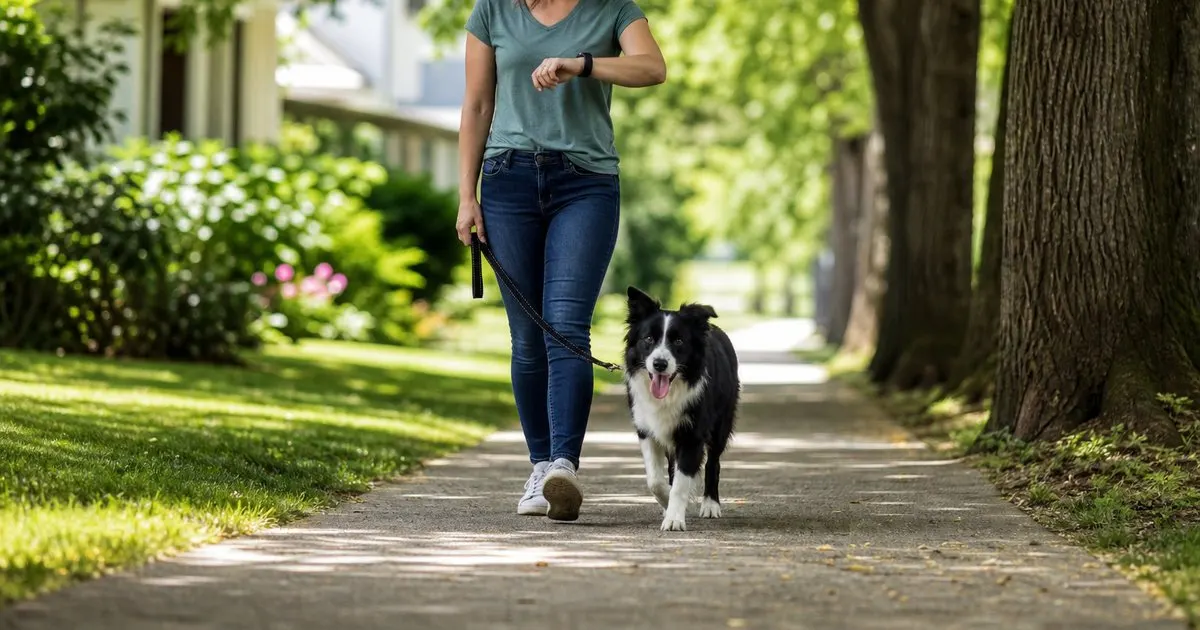
What the midday visit is actually for
Most owners are not buying fitness at noon. They are buying a bathroom break, a drink of water, a few minutes of company in the middle of a long empty day, and the peace of mind that someone laid eyes on their dog. The midday visit is one piece of the dog's whole day, alongside the morning walk, the evening walk, and whatever play happens at home. Once you see it that way, the length question changes from how long can I walk this dog to what does this dog need between 11 and 2 to be comfortable until the owner returns. Related: What Information Do Dog Owners Actually Want in a Post Walk Update?
That framing explains why a thoughtful twenty minute visit with a proper sniff, a potty stop, and a water refill often serves a dog better than a rushed forty minutes marched around the block. Puppies need frequency far more than duration, since their bladders do not care how long the last walk was. Senior dogs need a gentle loop and a soft landing, not distance. Young working breeds and adolescent dogs are the group where length genuinely changes the afternoon, and they are the ones worth discussing a longer visit with. Related: How Many Dogs Can One Walker Safely Handle on a Single Group Walk?
Keep reading: How Should a Dog Walker Plan Efficient Routes for Back to Back Visits?, What Information Do Dog Owners Actually Want in a Post Walk Update?, Why Do GPS Check Ins Matter So Much for Professional Dog Walkers?. See how PupRoutr helps you dog walking route planning and visit check-ins.
Matching length to the dog, not the menu
As starting points rather than rules, seniors, flat faced breeds, and dogs recovering from illness or surgery usually do well with roughly fifteen to twenty minutes of slow, shaded walking. A healthy average adult dog settles nicely after about thirty minutes that includes real sniffing time. High drive breeds and adolescents between roughly one and three years often need forty five to sixty minutes, or better, a second shorter visit later in the day, which spreads the relief instead of stacking it. Weather adjusts everything downward in heat and sometimes upward in cool weather for dogs who love it.
The real test happens after you leave. Ask owners to notice how the dog is at 5 p.m. If the dog is still pacing, chewing, or barking at the window, the visit was too short or too passive for that dog. If the dog is calm and eats dinner normally, the length is right, and adding minutes would only add cost. Revisit the length every few months, since a puppy that needed frequent short visits becomes an adolescent that needs longer ones, and an aging dog quietly needs less than it did last year.
Quality inside the minutes
Minutes are not equal. A walk where the dog gets to sniff, choose a direction now and then, and stop at the interesting fence post is more tiring and more satisfying than a brisk lap where every pause gets tugged along. Sniffing is mental work, and it is why many trainers describe a slow decompression walk as more valuable than a fast one. Vary the route a little so the dog is not reading the same three mailboxes every day. Use a few minutes to reinforce loose leash walking or a sit at the curb, which owners appreciate more than they say. Related: How Should a Dog Walker Plan Efficient Routes for Back to Back Visits?
Be honest with clients about what a visit can and cannot do. Transit time from the door to the car or the park is not walk time, and if a visit is booked at thirty minutes the dog should be moving or engaged for most of that. Door to door timing with a check-in and check-out removes any ambiguity, and it protects you when a client asks whether the walk was really thirty minutes. A short indoor play session at the end of a visit counts too, as long as the client knows that is how the time is structured. Related: Why Do GPS Check Ins Matter So Much for Professional Dog Walkers?
Scheduling and pricing implications
Visit length shapes your entire day. More thirty minute visits fit into the midday window than sixty minute ones, and the difference between the two is not one client, it is often a whole cluster of clients on the same block. Offering sixty minute walks by default can quietly cap the size of your business. Many walkers find a forty five minute tier is the useful middle ground for high energy dogs, and a twenty minute drop-in tier covers seniors and puppies without pricing owners out. Whatever tiers you offer, the clock starts at the door, and saying so in the agreement avoids awkward conversations later.
The pricing side starts from the principle in our earlier piece on recurring walk rates, which is to price the whole visit, travel and update included, rather than the walk minutes. Applied to tiers, the short version is that a longer visit should cost more per visit but can cost less per minute, which keeps the option attractive for owners who genuinely need it. Route planning helps too: grouping the sixty minute dogs in one part of the day and the short drop-ins in another keeps the schedule from fragmenting. Once a week, compare each visit's length against the drive time on either side of it, using your check-in and check-out times or a simple sheet, so you can see when a route is mostly windshield, which is the signal to rethink either the length or the geography.
- The midday visit is for relief, water, and company, not fitness, so length matters less than most owners assume.
- Roughly fifteen to twenty minutes suits seniors and flat faced dogs, thirty suits most adults, and high drive dogs benefit from forty five to sixty or a second visit.
- Sniffing, a little route variety, and a few minutes of leash manners make a short visit more valuable than a long forced march.
- Longer default visits quietly cap how many clients fit in the midday window, so use tiers and start the clock at the door.

Julien Jimenez
Julien Jimenez is an independent software builder based in Paris. He designs, ships, and operates focused SaaS products for small businesses and independent professionals. Read the full author page.
Prove every walk happened, effortlessly
Dog walking route planning and visit check-ins. PupRoutr is built to help you put this into practice.
Plan my walksMore from the PupRoutr blog
How Should a Dog Walker Plan Efficient Routes for Back to Back Visits?
What Information Do Dog Owners Actually Want in a Post Walk Update?
Why Do GPS Check Ins Matter So Much for Professional Dog Walkers?
Get the PupRoutr playbook
Practical guides on dog walking visits, straight to your inbox as we publish them. No spam, unsubscribe any time.