Which Checks Should a Dog Walker Complete Before Leaving a Client's Home?
The last two minutes of a visit produce most client complaints. A repeatable close-out routine for water, paws, doors, gates, alarms, gear, and the note that proves you did it.
Why the close-out matters more than the walk
Owners do not come home to the walk. They come home to the house. Muddy paw prints across the hallway, a back gate swinging open, an alarm that never got set, a leash left on the porch, or a dog shut in the wrong room are what generate the evening text message, and none of them have anything to do with how good the walk was. A walker can deliver a perfect thirty minutes and still lose the client over a wet floor. The close-out is the part of the visit the owner actually inspects. Related: How Should a Dog Walker Plan Efficient Routes for Back to Back Visits?
It is also the part most likely to go wrong when you are running late. The next visit is in twelve minutes, the dog is fine, and you are already thinking about traffic. A fixed checklist done in the same order every time turns the close-out into muscle memory, so a rushed day looks the same as a calm one. Keep it short enough to complete in two or three minutes, and keep it in your app or on a card so a backup walker follows the identical routine.
Keep reading: How Should a Dog Walker Plan Efficient Routes for Back to Back Visits?, What Information Do Dog Owners Actually Want in a Post Walk Update?, Why Do GPS Check Ins Matter So Much for Professional Dog Walkers?. See how PupRoutr helps you dog walking route planning and visit check-ins.
The dog: water, paws, treats, and where you leave them
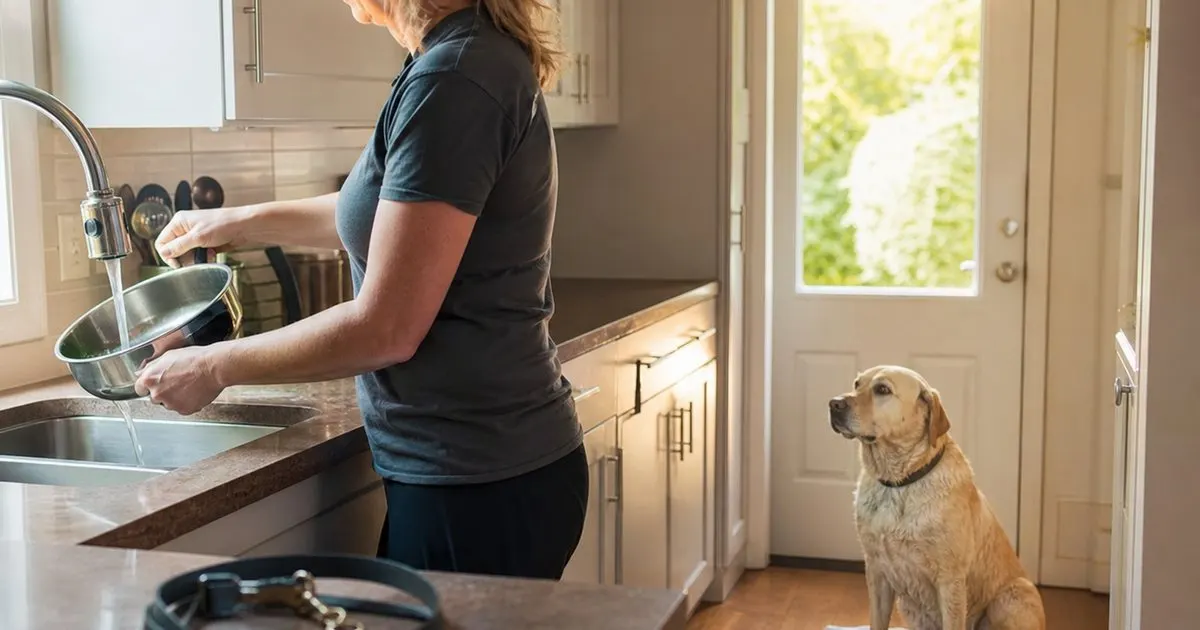
Start with the dog because that is the priority and the easiest to forget. Refill the water bowl with fresh water, not a top-up. On wet days, dry the paws, belly, and tail with the towel the owner leaves out, and check between the toes for burrs, ice, or ticks depending on the season. Give the owner-approved treat if there is one, and only that one. Then settle the dog exactly where the profile says: crate, gated kitchen, free roam, or bedroom with the door open. A dog left loose in a house where it is normally crated can spend four hours redecorating, and a dog crated when it is normally loose is a welfare issue.
Before you move on, look around. Count the dogs if there is more than one, and make sure none of them followed you into a room you are about to close. Check for anything unusual that happened while you were out: an accident, vomit, a chewed item, a knocked over plant. Clean what you can, and note anything you could not. If the dog seems off in any way, lethargic, not drinking, favoring a leg, say so in the note. Owners would rather read a false alarm than discover a problem hours later. Related: Which Photos Make the Best Walk Updates for Anxious Dog Owners?
The house: gear, gates, windows, lights, and alarms
Return the leash, harness, and towel to the spot you found them so the owner is not hunting for gear in the morning. Then walk the perimeter you used. The yard gate gets latched and pushed to confirm it caught. The back door gets closed and locked, even if you only opened it for a moment. Any window you cracked for air goes back the way you found it. Leave lights and the thermostat exactly as they were unless the profile says otherwise, because an owner who finds every light on wonders what else changed. Related: What Information Do Dog Owners Actually Want in a Post Walk Update?
Alarms deserve their own step. Confirm the code and the arming sequence in the profile, set it, and wait for the confirmation tone or light before you close the door. Lock every door you used, including the one you leave through, and pull the handle to confirm it caught. If you entered through the garage, watch the door come all the way down before you walk away. Put the key back in the lockbox and spin the dial. None of this takes long, but skipping any single step is the kind of thing an owner discovers at 6 p.m. and remembers for years. Related: How Many Dogs Can One Walker Safely Handle on a Single Group Walk?
The record: check-out, note, and photo
The last step is proof. A check-out timestamp tells the owner when the door locked behind you, which settles more questions than any message. Write a short note in a consistent format: what the dog did outside, water refilled, paws dried, where the dog is settled, and anything unusual in the house. Add a photo of the dog settled in its spot, which reassures the owner more than a mid-walk action shot. PupRoutr attaches the check-out time and note to the visit automatically, and a text with the same details works if you are consistent about sending it every time.
If you noticed something concerning in the home, a leak under the sink, a package on the step, a door that would not latch, message the owner right away rather than burying it in the note. Save the checklist itself in your app or on a laminated card in your kit so every walker on your team closes out a home the same way. Consistency here is what lets an owner stop checking the house when they get home, and that trust is the whole business.
- Owners inspect the house, not the walk, so the close-out is where trust is won or lost.
- Fresh water, dried paws, the approved treat, and the dog settled exactly where the profile says come first every time.
- Latch the gate, close windows, leave lights as found, set the alarm and wait for confirmation, and pull-test every door you used.
- A check-out timestamp, a consistent note, and a settled-dog photo prove the routine happened and protect you when questions come up.

Julien Jimenez
Julien Jimenez is an independent software builder based in Paris. He designs, ships, and operates focused SaaS products for small businesses and independent professionals. Read the full author page.
Prove every walk happened, effortlessly
Dog walking route planning and visit check-ins. PupRoutr is built to help you put this into practice.
Plan my walksMore from the PupRoutr blog
How Should a Dog Walker Plan Efficient Routes for Back to Back Visits?
What Information Do Dog Owners Actually Want in a Post Walk Update?
Why Do GPS Check Ins Matter So Much for Professional Dog Walkers?
Get the PupRoutr playbook
Practical guides on dog walking visits, straight to your inbox as we publish them. No spam, unsubscribe any time.