What Should a Dog Walker Do When a Client's Dog Is Reactive to Other Dogs?
Reactive dogs can be walked safely, but never on autopilot. How to set up the intake, the gear, the route, and the escape moves so both of you finish the walk calm.
Deciding whether to take the dog at all
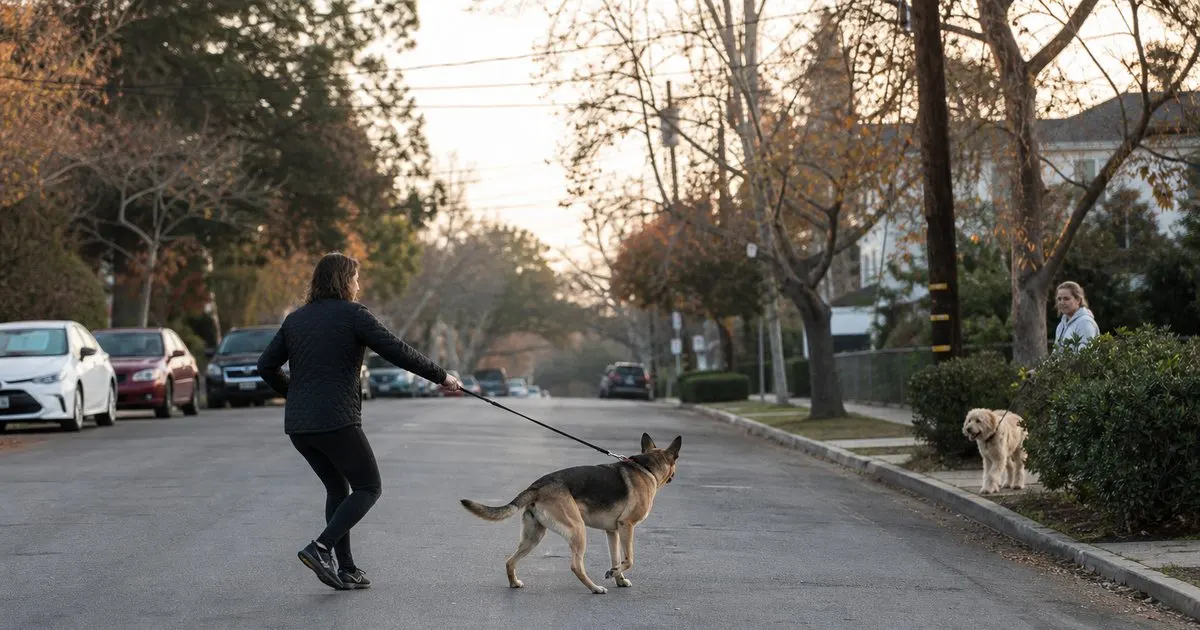
Be honest about your skill level before you say yes. A dog that barks and lunges at other dogs on leash is manageable for a walker with experience and a plan, and dangerous for a walker who has only handled easygoing dogs. The intake conversation should cover specifics: what the triggers are, at what distance the dog reacts, whether it has ever bitten a dog or a person, whether it is muzzle trained, what gear the owner uses, and whether a trainer is involved. Vague answers like he is fine, just a bit excitable are a reason to schedule a meet and greet on a real walk before committing. Related: How Many Dogs Can One Walker Safely Handle on a Single Group Walk?
Set conditions and put them in writing. Reactive dogs walk solo, never in a group, and never with a second dog from the same household unless the owner has shown you they walk calmly together. A dog with a bite history walks in a muzzle it has been conditioned to accept, or it does not walk with you. Reserve the right to end a walk early and to end the arrangement if the dog escalates. Owners of reactive dogs have usually been turned away before, and most are relieved to hear a walker who takes it seriously rather than one who promises it will be fine. Related: What Information Do Dog Owners Actually Want in a Post Walk Update?
Keep reading: How Should a Dog Walker Plan Efficient Routes for Back to Back Visits?, What Information Do Dog Owners Actually Want in a Post Walk Update?, Why Do GPS Check Ins Matter So Much for Professional Dog Walkers?. See how PupRoutr helps you dog walking route planning and visit check-ins.
Gear and setup that keep you in control
Use a well fitted harness with a front clip, or a double connection to both harness and collar, so a sudden lunge does not turn into a slipped collar. The leash is a fixed length of about four to six feet, held with a wrist loop and a second grip, never a retractable one. A retractable leash gives the dog distance you cannot take back and a locking mechanism you cannot trust in the moment that matters. Carry a treat pouch with high value food if the trainer's plan calls for it, and check every buckle and clip before you leave the house, because gear fails on the day you skipped the check. Related: Why Do GPS Check Ins Matter So Much for Professional Dog Walkers?
The walk starts before the door opens. Look outside first, through a window if you can, and step out only when the immediate area is clear. Keep the dog close on the side away from the street. Your own posture matters more than people expect: a tense handler with a short, tight leash telegraphs trouble to the dog, so breathe, keep the leash loose when nothing is happening, and save the shorter grip for when you actually need it.
Route and timing choices
Timing is your first tool. Early morning and the quiet stretch of early afternoon have fewer dogs out than the after work rush, so book reactive dogs into calm windows where your schedule allows. Choose wide, low traffic streets with good sightlines over narrow paths and blind corners, and skip dog parks, busy trailheads, and anywhere with off leash dogs entirely. Learn where the neighborhood dogs live, especially the ones that fence-run, and route around those houses. Vary the route slightly so the dog is not rehearsing the same tense corner every day.
Plan escape moves before you need them. Driveways, side streets, and parked cars all work as visual blocks that let the dog lose sight of the trigger. Know at each block which way you would turn if a dog appeared ahead, and practice the U-turn cue on quiet days so it is smooth when it counts. Note the trigger spots and the loop you took in the visit notes, and review those notes from past walks to find the calmest route. PupRoutr keeps the check-in and check-out stamps and your own visit notes attached to each visit, which makes it easy to look back at which loops went smoothly and which produced a reaction, but a paper map with pencil marks does the job too. Related: How Should a Dog Walker Plan Efficient Routes for Back to Back Visits?
Handling the moment and reporting back
The goal is to see the other dog before your dog does. Scan constantly, and the moment you spot a trigger, add distance calmly: cross the street, step behind a car, or turn and walk the other way while talking to the dog in a normal voice. Keep moving, since standing still lets the tension build. If the trainer's plan uses food, scatter a few treats on the ground once the dog can look at the trigger without reacting, which gives it something to do with its nose. Never yank, yell, or punish a reaction; it confirms to the dog that other dogs predict bad things, and it makes the next encounter worse.
After a reaction, give the dog a few minutes of quiet sniffing in a calm spot before heading home, so the walk ends on a low note rather than a high one. Then report specifically: what the trigger was, how far away it was, how the dog reacted, how long it took to recover, and what you did. That level of detail is exactly what the owner's trainer needs, and it turns your walks into useful data rather than a daily source of worry. If reactions are getting worse over weeks despite the plan, say so and suggest the owner loop the trainer in, and if you are no longer comfortable, be honest about that too.
- Take reactive dogs only after a detailed intake covering triggers, distance, bite history, and muzzle training, and only as solo walks.
- A front clip or double connected harness with a fixed length leash, never a retractable, is the baseline gear.
- Walk at quiet times on wide streets with clear sightlines, avoid dog parks and known fence-runners, and pre-plan an escape move for every block.
- Add distance the moment you spot a trigger, never punish, end walks on a calm sniff, and report the specifics to the owner and trainer.

Julien Jimenez
Julien Jimenez is an independent software builder based in Paris. He designs, ships, and operates focused SaaS products for small businesses and independent professionals. Read the full author page.
Prove every walk happened, effortlessly
Dog walking route planning and visit check-ins. PupRoutr is built to help you put this into practice.
Plan my walksMore from the PupRoutr blog
How Should a Dog Walker Plan Efficient Routes for Back to Back Visits?
What Information Do Dog Owners Actually Want in a Post Walk Update?
Why Do GPS Check Ins Matter So Much for Professional Dog Walkers?
Get the PupRoutr playbook
Practical guides on dog walking visits, straight to your inbox as we publish them. No spam, unsubscribe any time.