What Should Happen in the First Ten Minutes After a Dog Slips Its Leash on a Walk?
A slipped collar turns a routine midday visit into an emergency in seconds. Here is a first response that gets most dogs back, plus the equipment and notes that stop the next one.
The First Thirty Seconds Decide the Rest
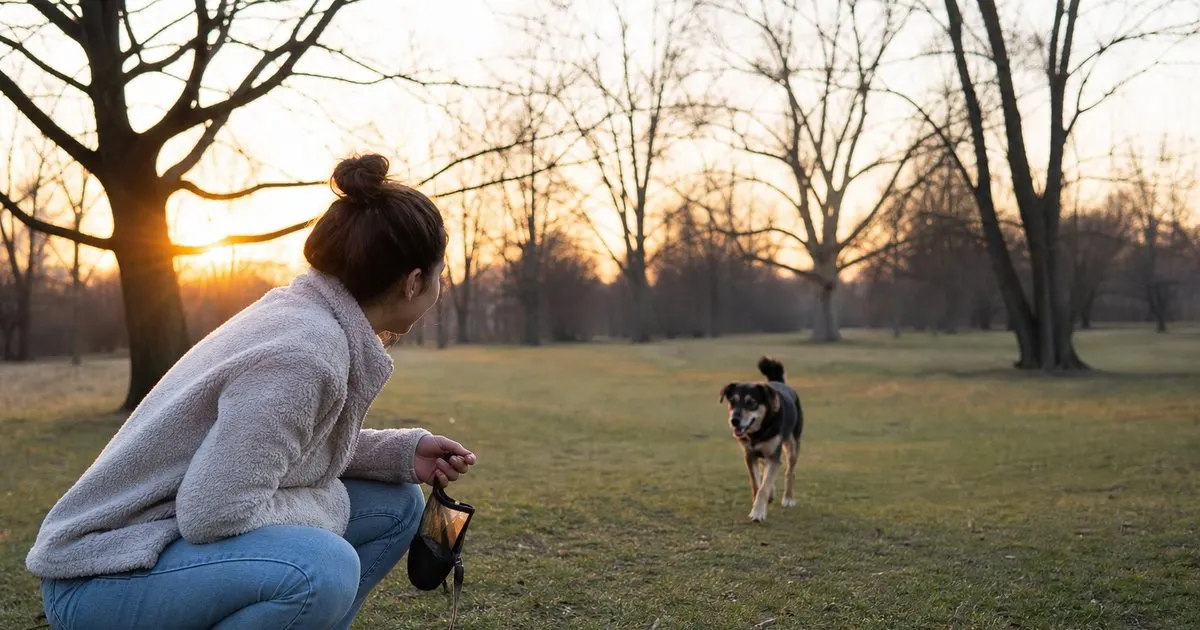
Every instinct says sprint. Do not. Chasing turns a startled dog into a fleeing dog, and almost any healthy dog is faster than you over the first block. The job in the opening seconds is to stop being the thing the dog is running from and become the thing worth running toward. Crouch low, turn sideways rather than facing the dog head on, keep your voice light and high, and open a treat pouch or crinkle a bag. Many dogs will curve back toward a person who is low, sideways, and moving away from them. Related: How Many Dogs Can One Walker Safely Handle on a Single Group Walk?
If you are walking a group, the dogs still on leash come first. Clip them to something solid you trust, a fence post or a sturdy rail, or loop the leashes and keep them with you if that is safer than the anchor you have. A second dog getting loose while your attention is on the first turns a recoverable situation into a genuine crisis. Before you move anywhere, fix the exact slip point, the direction the dog went, and the time in your head, because you will be repeating all three within minutes. Related: Why Do GPS Check Ins Matter So Much for Professional Dog Walkers?
Keep reading: How Should a Dog Walker Plan Efficient Routes for Back to Back Visits?, What Information Do Dog Owners Actually Want in a Post Walk Update?, Why Do GPS Check Ins Matter So Much for Professional Dog Walkers?. See how PupRoutr helps you dog walking route planning and visit check-ins.
Search the Small Circle Before the Big One
Loose dogs typically stay closer than people expect for the first stretch, especially in a neighborhood they know. Work outward from the slip point in tight loops rather than heading off in one direction. Check the places dogs actually go: their own front door and yard, the vehicle you arrived in, driveways, hedges, under decks and porches, along fence lines, and back along the route you had just finished walking. If you can spare it, leave the leash or something that smells like the owner at the slip point. Related: How Should a Dog Walker Plan Efficient Routes for Back to Back Visits?
Stay audible while you search, but pick the right tone. Call the dog the way you would call them to dinner, not the way you would call them out of the trash, because a dog that thinks it is in trouble will not come in. A squeaky toy or a rattling treat bag carries further than a name. Once you have covered the tight circle twice with no sighting, widen on purpose and prioritize hazards first: the nearest busy road, any water, and the park exits, since that is where the genuinely bad outcomes live.
Who to Call, and in What Order
Call the owner early, even though it is the call you least want to make. Waiting until you have good news costs you both help and trust, and owners forgive the escape far more readily than the delay. They know the dog's recall word, the hiding spots, the neighbor who will open a gate, and whether the dog heads for the same field every time. Ask them to check any camera at the house and to come home if they possibly can. Related: What Information Do Dog Owners Actually Want in a Post Walk Update?
Then widen the net fast. A second walker or a friend can drive slow loops while you stay on foot near the slip point, which matters because the dog is more likely to circle back to where it lost you. Contact animal control or the police non emergency line, post to the neighborhood groups that are active in that area, and call the microchip registry so the number is flagged as missing. Have one message ready with a clear photo, the dog's size, collar and harness description, the last known location, and your phone number. Plenty of reunions come from a tag or a chip rather than from the search itself.
Making Sure It Does Not Happen Twice
Most escapes trace back to equipment or thresholds. Check fit at every single visit, because a flat collar that slides over the ears, a harness loosened by whoever handled the dog last, a worn clip, or a frayed strap will fail on the one day the squirrel appears. A properly fitted harness with a second attachment point, such as a backup slip lead or a leash clipped to both harness and collar, removes most single point failures. Thresholds are the other half: front doors, gates, car doors, and elevator openings. Leash first, open second, and keep a hand on the harness while the door is moving.
Then write the risk down where the next person will see it. Bolts at the front door, backs out of a flat collar, fixates on squirrels at the corner: those belong in the client record, not in your memory or an old text thread. In PupRoutr those notes sit on the visit card next to the check in, so whoever covers the walk reads them at the door rather than after the fact. Finally, rehearse the plan in your head once. Knowing where you would clip the group and who you would call first is exactly what makes those first thirty seconds calm instead of frantic.
- Chasing pushes a loose dog further away, while getting low and moving the other way pulls it back.
- Secure the rest of the group before you search, so one escape never becomes two.
- Work tight circles around the slip point first, then widen toward roads, water, and exits.
- Call the owner in the first minutes, and record bolt risk in the client notes for whoever walks next.

Julien Jimenez
Julien Jimenez is an independent software builder based in Paris. He designs, ships, and operates focused SaaS products for small businesses and independent professionals. Read the full author page.
Prove every walk happened, effortlessly
Dog walking route planning and visit check-ins. PupRoutr is built to help you put this into practice.
Plan my walksMore from the PupRoutr blog
How Should a Dog Walker Plan Efficient Routes for Back to Back Visits?
What Information Do Dog Owners Actually Want in a Post Walk Update?
Why Do GPS Check Ins Matter So Much for Professional Dog Walkers?
Get the PupRoutr playbook
Practical guides on dog walking visits, straight to your inbox as we publish them. No spam, unsubscribe any time.